



Ramp built an AI SDR that drove about 30% of pipeline for years. Then it shut it down.
Outbound teardowns by October 2026
- Sales team
- 5 SDRs in 2021, about 500 people in sales by 2025
TL;DR
By late 2025 competitors had the same automation, buyers were tired of cold outbound, and with about 500 salespeople selling several products, the sale had grown more complex. Ramp shut its AI SDR down and handed the data behind it to its reps: ranked accounts, the reason why, and a draft to review.
The lesson
Automated outbound stops paying when competitors run the same tools, buyers tire of it, and your sale gets more complex. Then the advantage moves to what competitors can’t buy, like your own data and your reps.
For your team
You can run the same kind of system without building it: ranked accounts, the signal behind each one, and drafts reps approve.
What Ramp did
The original solution
“We had a team of five SDRs that needed to reach out to millions of people,” co-founder Gene Lee wrote later of 2021. Nothing on the market could cover that, so Ramp built its own AI SDR: software that does a sales development rep’s prospecting and first outreach. It called the system OATs, the Outbound Automation Team.1
Ramp’s data stack brought product, CRM, support, marketing and sales data together in one warehouse. OATs used that data to pick prospects and personalize outbound at scale, with an early version of ChatGPT drafting the emails and sorting the replies. By 2023 a growth engineering team owned the channel and ran it like a product.2,3,4
- Market data, in one warehouse
- Target prospects identifiedScoring criteria not described
- Email drafted by an early ChatGPT
- Sent automatically, at scale
- Replies classified and ranked for reps
A 2022 case study put OATs at 25% of pipeline, and Lee later said it accounted for roughly 30% “for years.”1,2
The problem changed
In the years before the shutdown, the returns flattened. Lee gave three reasons. The tools had become common: “there are dozens of automated outbound solutions, all operating on similar data which our competitors also have access to.” Buyers had seen too much of it: “the world is experiencing cold-outbound fatigue.” And Ramp had changed. It now had around 500 people in sales and several products to sell, so the sale had grown more complex.1
2021
- Sales teamFive SDRs
- Automated outboundRare. ChatGPT hadn’t launched
- DataRamp’s own view of the market
- BuyersNot yet saturated
- The saleOne market to cover
2025
- Sales teamAbout 500 people in sales
- Automated outboundDozens of vendors
- DataSimilar data available to competitors
- BuyersCold-outbound fatigue
- The saleSeveral flagship products
The decision
December 2, 2025
Ramp shut down a system that had driven about 30% of pipeline for years and pointed its data at its sales reps.
The shift had been under way for two years. Lee called the data the company’s long-term edge, and Ramp stopped using it to send email on its own.1
The redesign
Ramp Revenue puts the same data in front of each rep every morning.
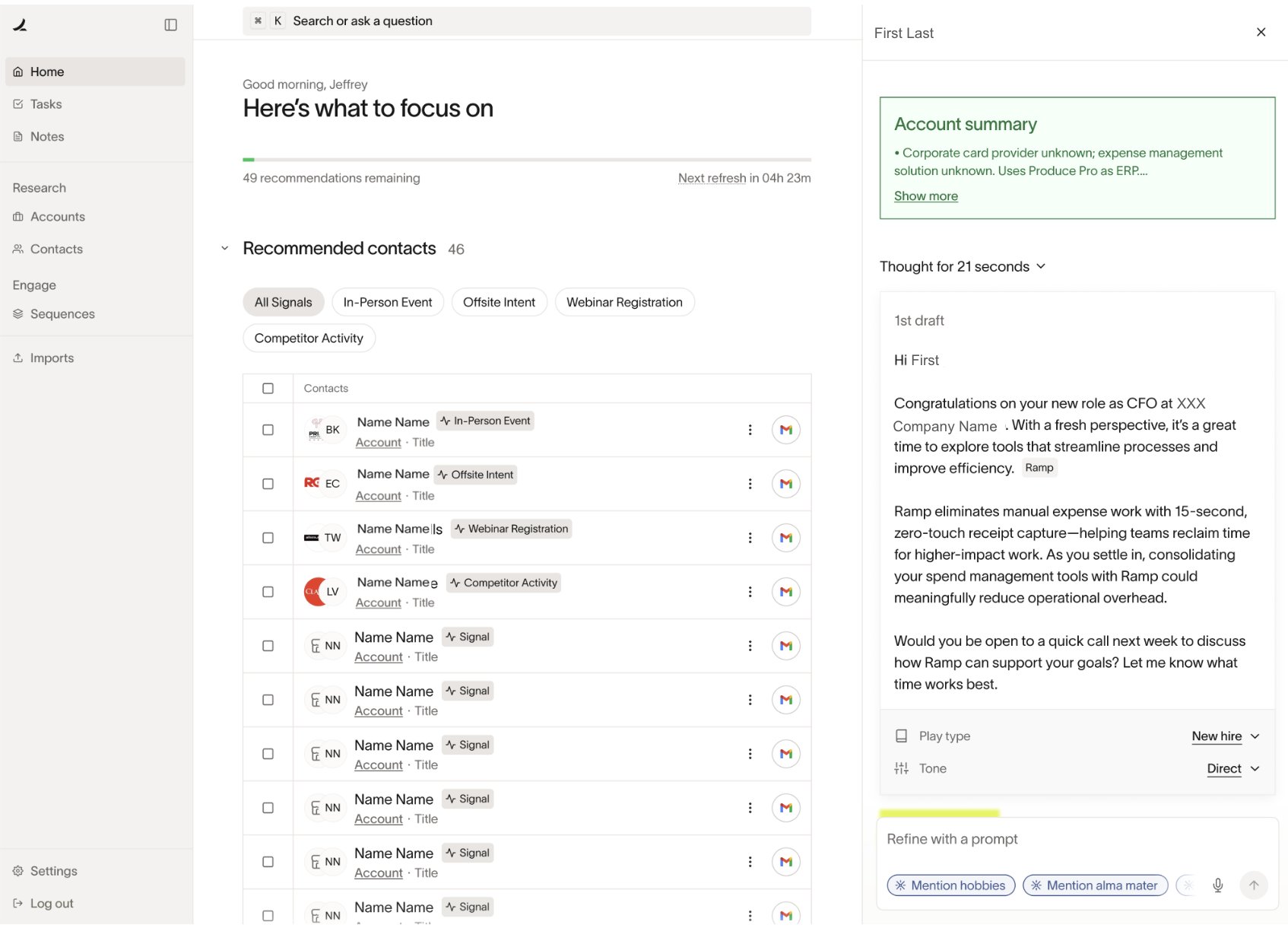
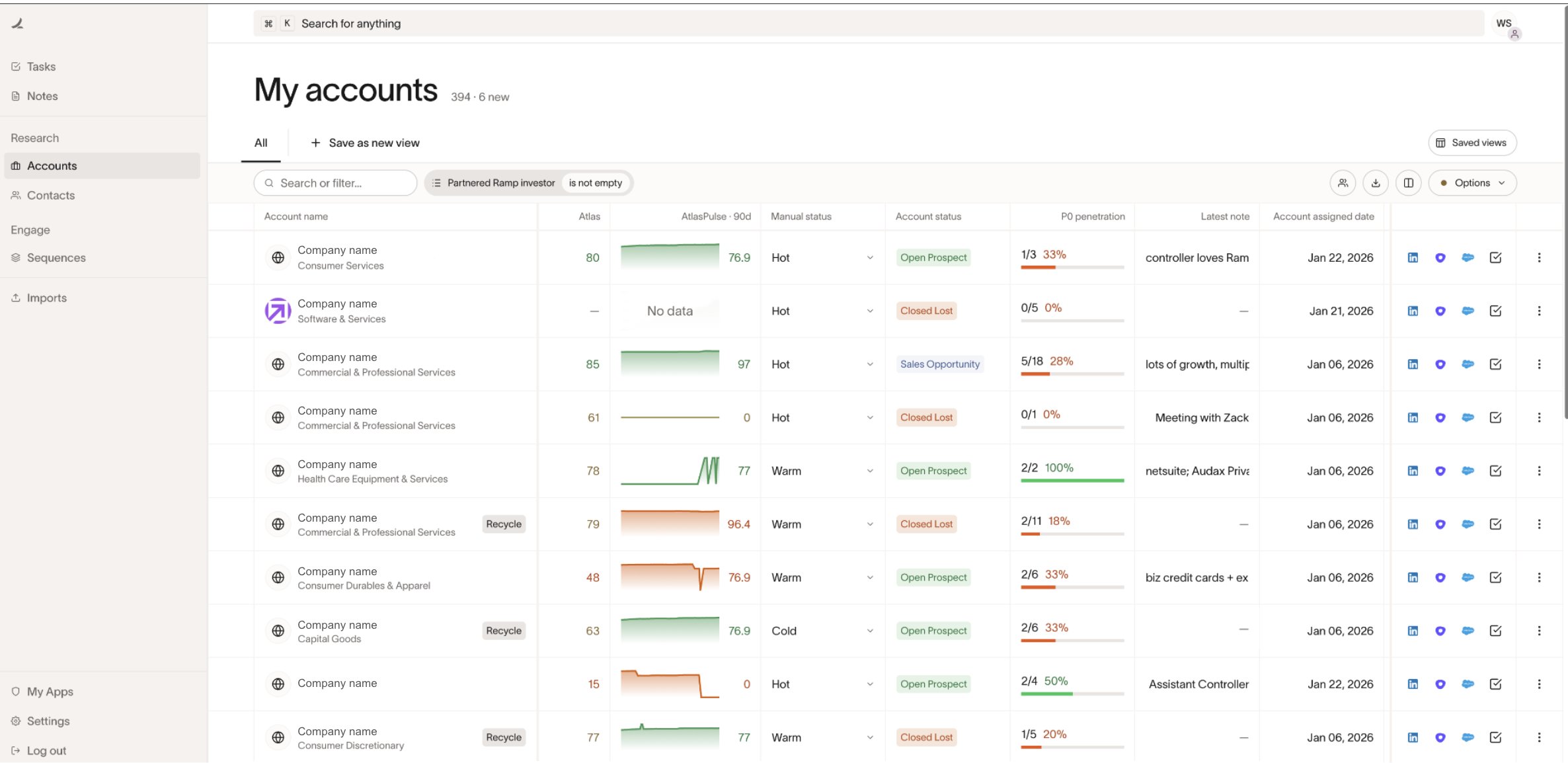
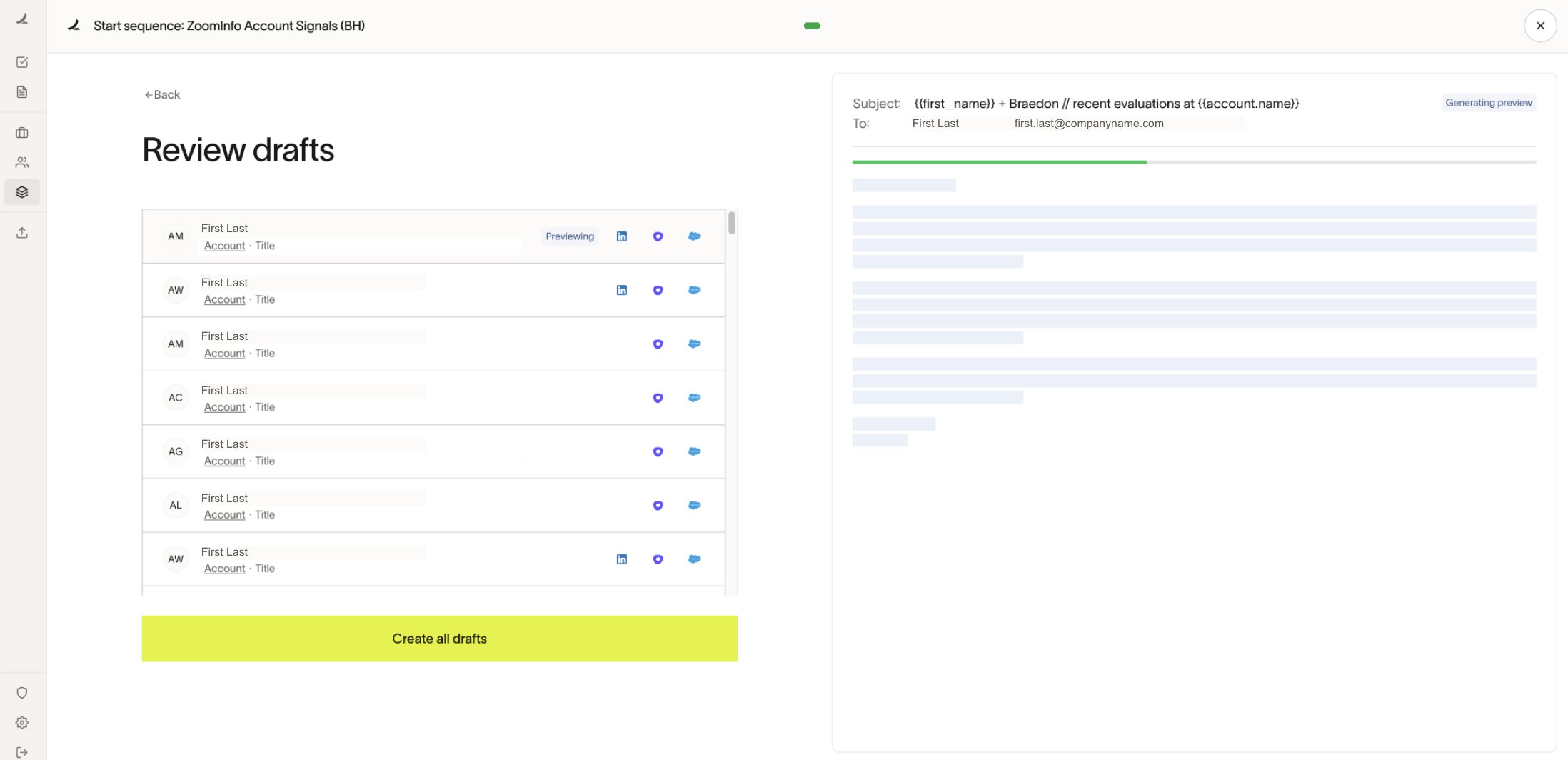
Ramp built an internal tool called Ramp Revenue. A rep opens it in the morning and sees, in the words of growth product lead Keyan Sarrafzadeh, “all the prospects that you should be focusing on, an explanation of why.” Each account shows its signals, such as visits to the pricing page or a new hire, and the tool writes a first draft. In the screenshots Ramp shared, the rep reviews each draft before the sequence starts.5,6
What the rep sees now
The learning system
One central team can’t anticipate every workflow, so reps now build their own AI tools on the same data, through what Ramp calls its Growth MCP, a permissioned layer that connects AI tools to Ramp’s CRM and outreach data. There were 79 by mid-2026. Every time one runs, it has to log why. Ramp groups those reasons to see what reps need, and builds the most useful ideas back into Ramp Revenue. Agents now do much of the routine work, from inbox triage to CRM updates, and people still approve what goes out.6,7
The result
Ramp says more than 80% of sales workflows and more than 90% of GTM teams now use the new system. Both figures measure how widely the system is used, and neither measures pipeline.7,8
- Feb 202680%+of sales workflows run on Ramp Revenue
- Jun 202679rep-built tools, with 300 to 400 reps using the layer
- Jul 202690%+of GTM teams use the system
What it took
Ramp built two systems, and the first one became something anyone could buy.
What Ramp spent years building is now, in Lee’s words, one of “dozens of automated outbound solutions, all operating on similar data.”1
What to borrow
- Track what your automation adds to pipeline over time. Pipeline contribution, conversion and reply quality show when it starts to flatten.
- When automated outbound stops paying, put your own data in front of reps. Ramp kept the warehouse that fed OATs and gave it to reps as ranked accounts with a reason.
- Let software draft, and have the rep approve before anything sends. In Ramp Revenue each draft waits for the rep’s review.
How to build a version of this in Unify
Start where Ramp ended up
You can run a version of this without building it.
Ramp built a warehouse to get one view of its market. In Unify, your CRM, warehouse and product usage data come together with enrichment from 40+ data sources, so you start with the data layer Ramp had to build. A version of Ramp’s system takes three steps:
- Define the accounts. Build an Audience from your CRM and Unify’s data: the companies that fit, weighted by what they’re worth.
- Add the why-now. Turn on Signals like website visits, new hires and champion job changes, so every account carries a reason.
- Route the work. A Play sends lower-priority accounts into automated sequences and puts the rest in each rep’s Book of Business, with research and a draft to review.
One account, from signal to next step
- Account
- Halden SystemsIn your Audience: fits on size, industry and the tools it already uses.
- Signal
- Three pricing page visits this week, and a new VP of FinanceFrom Signals: website visits and new hires.
- Why it matters
- New finance leaders often review spend tools early, and someone there is comparing prices nowAI research writes the reason on the account, so the rep doesn’t start from zero.
- Next step
- Call task for the account owner, due today. An email to the new VP waits for the rep’s approval.From the Play: owner assigned, contacts found, Sequence started.
outbound motionEach rep’s Book of Business shows their accounts, ranked by fit and timing, with the latest signal, where each conversation stands and the last sales activity.

 Chat